



Table of Contents:
- Introduction
- The Science Behind Reading Aloud
- Why Older Children Still Benefit
- How GD Goenka Integrates Read-Aloud Sessions
- What Parents Can Do at Home
- Recommended Read-Aloud Books by Age
- Conclusion
1. Introduction Many parents associate read-aloud time with the toddler years, but its benefits don’t end there. At GD Goenka Public School, Mahanagar, we actively use reading aloud in primary classrooms to build deeper comprehension, vocabulary, empathy, and engagement.
2. The Science Behind Reading Aloud Studies show that reading aloud:
- Activates multiple brain regions tied to language and memory
- Improves listening comprehension
- Increases exposure to complex vocabulary and sentence structures
- Builds a child’s imagination and attention span
Even fluent readers gain when they hear text spoken with expression and pacing.
3. Why Older Children Still Benefit In primary years, read-aloud sessions:
- Model fluent reading and tone variation
- Allow children to focus on meaning without decoding stress
- Spark curiosity and classroom discussions
- Encourage reluctant readers to engage with longer texts
These experiences foster a love for literature, not just reading proficiency.
4. How GD Goenka Integrates Read-Aloud Sessions Our practices include:
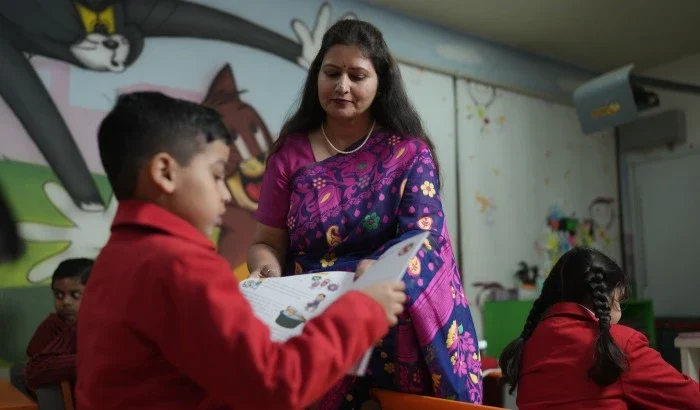
- Daily storytelling or read-aloud periods
- Interactive questioning during and after reading
- Thematic reading aligned with classroom topics
- Teacher read-alouds from fiction, nonfiction, and poetry
Children are also encouraged to read to peers or in small groups, building confidence and clarity.
5. What Parents Can Do at Home
- Set aside 10–15 minutes for shared reading
- Take turns reading aloud from a chapter book
- Discuss characters, feelings, and predictions
- Read expressively to show tone and emotion
Even older kids enjoy being read to—it creates calm and connection.
6. Recommended Read-Aloud Books by Age
- Ages 6–7: Charlotte’s Web, Amar Chitra Katha stories
- Ages 8–9: The Little Prince, Akbar and Birbal tales
- Ages 10–11: Wonder, The Jungle Book, short biographies
Mix genres to keep interest alive.
7. Conclusion Reading aloud remains a powerful tool well beyond the preschool years. At GD Goenka Mahanagar, it’s an integral part of language development, critical thinking, and joyful learning.
Leave a Reply